By Sujatha Balasubramanian
Navarasa literally means, nine emotions.
According to Indian tradition, the basic emotions in life are divided under nine heads; Shringara– love, Hasya– humour, Karuna– pathos, Roudra– anger, Veera– valor, Bhaya– fear, Bhibhatsa– horror, Vismaya– wonder and Shantah– peacefulness.
Each of the following stories is meant to portray one of the Rasas or emotions.
‘Vismaya’
Guru Somadeva said, “There was once a child who showed his wondering mother the marvels of the entire universe within his open mouth.”
The door of the capsule was shut upon them and the two men faced each other, their expressions hidden by the unwieldy protective helmets. The excitement and tumult outside was suddenly turned off as if by a switch, once inside the sound-proofed cubicle. John found the quiet a trifle unnerving. It was a routine he had been through before but this time it was the real thing. Deliberately he schooled his eyes to watch the panel.
The muffled roar of the take-off blast was a sudden relief from the tension. The two men braced themselves against the thrust of the impact, their movements regulated by months of training. They noted the readings on the various panels with a cool detachment.
The rocket accelerated with deceptive slowness and ascended towards the clear blue sky, its pointed black nose streaking through the atmosphere like lightning. They were travelling at nearly 16,000 miles an hour.
At 60,000 ft., the second stage solid fuel propellant was fused and with a sudden surge of speed the capsule containing the two men was thrust heavenwards at the incredible speed of 20,000 miles an hour.
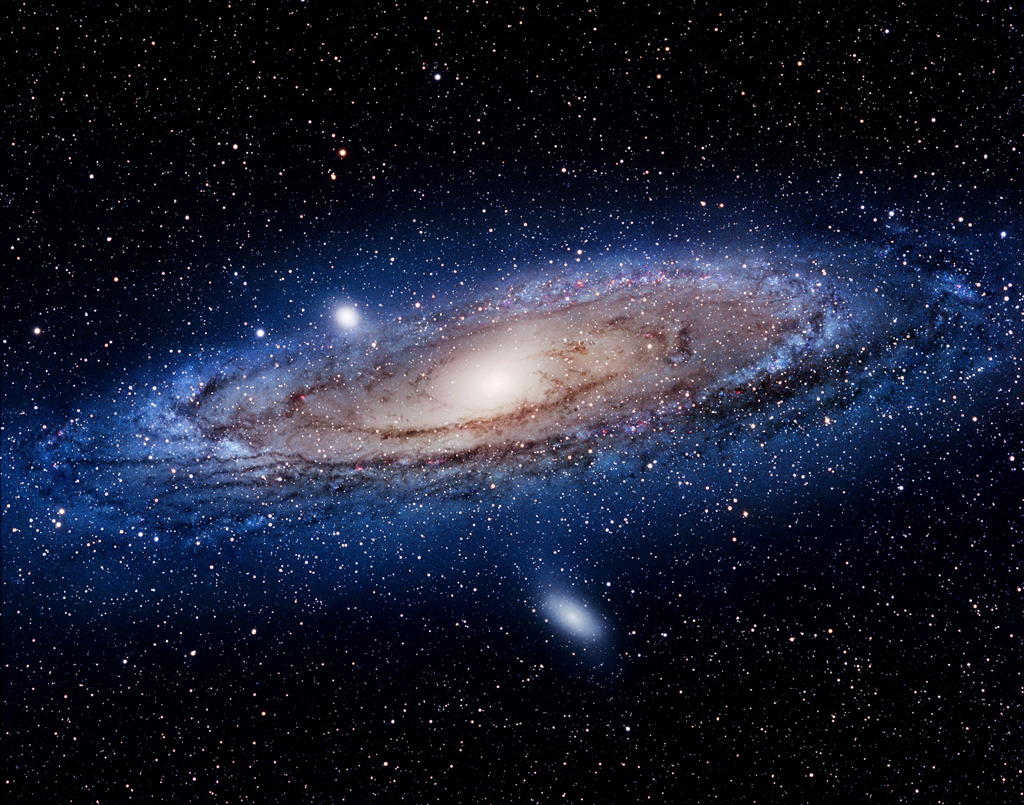
John watched the familiar sphere of the earth receding on the television and for a long while the screen remained bare. The space ship was travelling steadily towards the galaxy known as the Milky Way. When the first pinpoint of light denoting a star appeared on the screen, John made ready to leave. He checked the gauges on the space-suit and ensured that the life-giving cable was securely connected to the inside of the capsule. Then, with a hardly perceptible wave of his hand, he stepped outside of the hatch.
His first impression as he floated in space was one of slight disappointment. Why! It looks as if we are still within our universe, he thought. The sun, the planets in orbit, they all seemed vaguely familiar. But in a minute, he knew that he was floating in the outer space of an entirely different universe. So, each of the millions and millions of stars in the Milky Way was a sun, was it, with its own satellite planets? John wondered –. Ah! There it was, the counterpart of the Earth, spinning gently on its axis! As the dark spheres grew nearer and nearer, John was able to recognize hills and plains, oceans, wide snaking rivers. Then with a sudden shock it dawned on him that this was not a different planet resembling the earth, it was the earth itself!
The wide expanse of Europe, the high peaks of the Himalayas, the oceans, even a schoolboy couldn’t miss it now. But there was no sign of any habitation, no skyscrapers sticking out, no gigantic bridges! The landscape came close and John was able to discern some movement, life among the dense patches of green. As the space ship skimmed the surface of the planet, the saw groups of creatures clad in skins and walking on their hind feet, almost, it seemed to him, like man! He was looking at the earth as it was thousands of years ago!
The automatic camera which was situated in his helmet would be taking pictures of the planet to send back to earth and the instruments strapped on the back of his space-suit would record all the other data which the astronauts had been sent to collect. But John wondered — the earth of a thousand years ago!
Once more the spaceship accelerated and this time they set their sights on another tiny dot of light, one of the countless stars that were spread all along the Milky Way. This time, John made sure that the ship cruised along slower when they reached the outer surface of the satellite planet that looked so much like earth.
He dropped nearer and nearer the surface and hills, rivers and towns – yes, this time there were towns – came into view. Tall buildings, train tracks, ships at sea all of them took shape. John circled the globe, carefully noting the landmarks. No, there was no doubt that this was our planet the earth. As he passed over a small town, her caught sight of a small red brick house which brought memories crowding up his mind. He watched as the front door opened and a small boy of six or sever emerged. The boy picked up a large bicycle which was propped up against the gate and began to ride it, his short legs dangling inches above the pedals. A familiar fear clutched John as both bicycle and boy flew down the steep road uncontrollably, crashing into a heap at the bottom of the hill The four-inch scar along John’s shin bone began to itch. How long ago was that – thirty, thirty-one years? Now, John knew with sudden certainty that he was travelling back in time. Earth, thousands of years ago, earth, hundreds of years ago, earth of today. It was all there, time past and time present!
What about the future, thought John. That should also be there certainly. One of the suns out there in the Milky Way must have an earth of tomorrow. The spaceship rushed forward towards the next star.
John peered down through the protective glass of his helmet. The buildings were higher, the bridges more gigantic on this the future earth. More interesting to John, people were there in millions encrusting the surface like ants on a sugarloaf. They were all dressed alike in something like the diving suit of older days. As John bent to catch a closer glimpse, he noticed that all of them were, without exception, faceless!
A warning buzz sounded inside his helmet. “John. John. Time’s up. You’ve been out there for nearly ten minutes.” His companion’s voice sounded low and concerned.
 Stories by Sujatha