By Sujatha Balasubramanian, talking to R. K. Narayan in New York. Published in the Imprint, June 1976
As soon as I landed in New York, I rang him up at the San Carlos Hotel. “He’s away for the day”, said someone at the reception and gave me another number to call. After the third attempt, I managed to get him on the phone and identified myself, “What are you doing in New York?” he asked. “Isn’t it funny that we have to travel all around the world to meet each other?” I replied.
“I am getting used to it. It happens to me all the time. People who live next to my place and whom I haven’t seen in years, turn up in New York. It seems to have become the cross roads of the world.”
“Congratulations! That was a wonderful award from Washington University for My Days. It is a pity that we missed you in Washington,” I said.
“I had to get back in a hurry – some consultations with my publisher. How is your writing these days? I heard you have published a book.”
While I was musing on the greatness of this man, my husband took over and, after a prolonged conversation, R.K, agreed to join us at a friend’s place for dinner that evening.
He came early as he had promised, explaining that he was just a few minutes away from where we were staying at 71st and York. He appeared to have become frailer and smaller beneath the sober, dark suit that he was wearing. But the same gentle smile was very much in evidence and the innate courtesy of what is now known as an old-fashioned gentleman, “Such a long time –” he smiled at my husband and myself as we introduced him to our hosts. He settled down in a corner of the well-upholstered sofa with nothing stronger than a coke and began to talk of many things. “How is your father?” he asked me, and turning to our friend explained: “Her father and I joined school on the same day. A long time ago -” he said reminiscently. My husband expressed his sorrow at the passing away of his mother. “A grand old lady,” said my husband, “the last time I met her she talked to me of temples.”
“She was getting on, you know, and the end came quite peacefully. But,” the quiet voice became stronger, “something strange happened after that. There was an ornamental tree in our backyard which she always used to water herself for over twenty years. A week after my mother’s death, the tree also withered away without any apparent reason.” There was a note of wonder and calm acceptance in this statement.
“How long will you be here this time?” I asked.
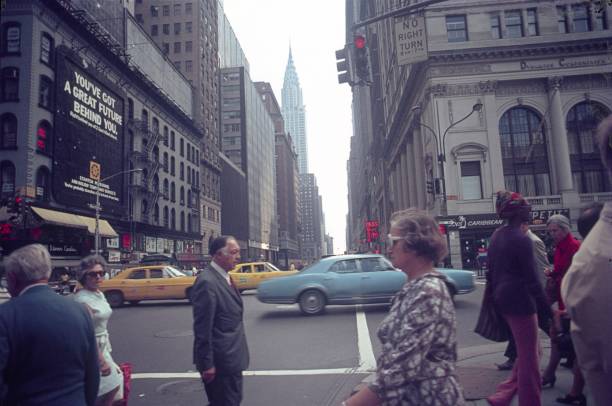
“Maybe another two of three months. I have some work with the publishers in connection with my new book. It is to be called ‘The Painter of Signs’ “. He told us a little about the book. “So I thought it would be better to stay on here. I love New York, it is one of the best cities in the world. I love walking on the streets looking at the people passing by. What wonderful libraries they have here! How anyone can be bored in New York, I cannot understand. I have so many friends here and, of course, there is my work.”
Our host’s son, a young undergraduate interrupted: “Could you tell us something about novels in general, why we say some are bad and some good? I like Ian Fleming. Why is he not called one of the great writers?”
R.K. took a sip of coke and wiped his glasses. I noticed that they were slightly thicker lenses than he used to wear before. “An author writes exactly what he wants to say. Let posterity be the judge of what is great and what isn’t. Take a book for what it is and, if you like it, good; if not, leave it.” His talk had not changed, there was the same tinge of South Indian accent and I could discern no American in it. There was something so enduring and soothing about the tone of his voice.
“I cannot understand the craze for analyzing books, taking apart the characters, the situations. Why! I believe there are a couple of Indian students who are busy writing theses on my books! Why can’t they leave them alone? I’ve enjoyed writing them and if the reader enjoys reading them, that’s all I want.”
“There was this Indian girl who interviewed me for a program in Washington. She hadn’t set eyes on any of my books before and must have frantically hunted around the night before the interview, for a spare copy or two. She finally located a volume of ‘Swami and Friends’ and hurriedly glanced through it. All next morning she was hurling quotations from that book at me. She hadn’t the least idea of what I had written since!” All this was without rancour, his voice still soft and well-modulated.
“‘A Horse and Two Goats’ is one of the best short-stories that I have read recently,” I said; “typically your writing and so amusing.”
“It was a true incident,” he replied, “It really happened the way I wrote it – to this American. There are so many stories in real life”, he said to me, “there should never be any shortage of material for a writer.”
“How is it that many of your short stories and articles do not happen in India at all?”
“Lots of magazines from abroad approach me for pieces and I send them these things,” he said with a shrug of his shoulders.
Over dinner we talked of many people, common friends and relatives. He still had the same old dry wit and gift of understatement that is a hallmark of his writing. “I’ve lost my passport again,” he complained. “A few years ago, I love it in a New York subway but most luckily for me, managed to get it back.” I nodded. He had told us this story sometime ago. “So I decided I would be careful and had the hotel manager lock it up in his safe. But I suppose I must be jinxed. Last week the hotel safe was burgled! There is such a lot of violence in this country. The mugging and armed robberies – a violent people altogether,” he shuddered delicately.
“I went to the nearest police station and made a complaint about the loss of my passport and asked the person in charge to put it down on paper and give me a copy so that I could get a fresh passport from our Embassy. ‘Don’t you think I have better things to do than write out forms for you? Ask your people to ring me up, and I’ll talk to them,’ he shouted at me. Can you imagine me going to the Embassy official and asking him to ring up the police officer who would confirm my story about the loss of my passport? With all the hundreds of forms and affidavits that have to be signed, the official will probably throw a fit. He was a bad man,” he said, referring to the policeman with a sigh, “really a bad man.” That was the worst stricture that ever passed his lips.
“You must write a sequel to My Days and put in all the little interesting bits,” I said.
“Don’t worry, we’ll do something about that passport,” reassured our host.
As we dropped him back to San Carlos he turned to me. “How far has your book gone? You must let it grow and develop my itself. Don’t be rigid, don’t be afraid to let the characters decide what happens next. When we meet again we shall describe the novel in greater detail.”
We watched till the slight frame went through the doors and then turned back into the drizzle of New York at night.
 Stories by Sujatha