By Sujatha Balasubramanian, published in FEMINA, 24th June, 1960
The pale gold of the rising sun turned the vast expanse of fields into emerald carpets. Here and there a few tamarind trees dotted the landscape, giving the requisite balance to the entire panorama. Already, a few men were out in the fields. But there was a stillness, a peace wrought with humidity and awe which heralded the break of day. The air was clean and fresh, so wonderfully different from the sooty, dust-laden atmosphere of the train.
The cart rumbled on its way along the road. One could hardly call it a road, thought Savitri as she shifted her position for the seventh time. The corner of a suitcase poked into the small of her back and she made a wry face. This was her first ride in a bullock cart. City-born and city-bred Savitri had never stepped into the poor man’s vehicle until now. “And for a year more, I suppose I will hardly ever see anything but a bullock cart in these parts,” she thought.
They passed through a mango grove and now the road was a mere lane going past the Mariamma temple, winding its way through the mud-thatched houses, cutting through the bazaar and further on to the bungalow. Savitri’s husband was waiting there and handed her down from the cart.
“How did you like the ride?” he asked. “I would have come to the station myself, but the cart is small and there was the luggage also to be carried home. I hope Velan looked after everything?”
“Oh! I enjoyed the bullock cart immensely, but I am not quite sure whether all my bones are intact,” Savitri laughed and rubbed her back ruefully.
“You will get used to it soon,” replied her husband. He took her around the house saying, “Now that you are here, I can leave all these matters to you. What a time I’ve had these last four days, putting the house in order, fixing up the servants – by the way, this is Velan’s sister, Ponni. I have engaged her from today to do the housework.”
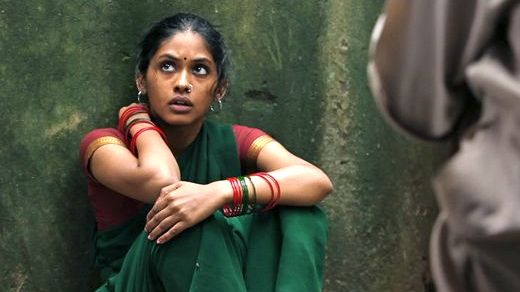
Ponni stood near the doorstep and respectfully folded her palms. She was of medium height, a sturdily built woman. The green and yellow checked saree that she wore above the ankles was tied in the peasant fashion, the ends tucked in securely at the waist. The bright red choli was skin-tight and moulded her figure to perfection. She was dark, but her face was a motley of yellows and reds, cheeks smeared heavily with turmeric, lips reddened with betel juice, a huge blot of kumkum on the forehead. There was a kind of subdued vitality about her that attracted Savitri very much. She must be fairly young, in her twenties, thought Savitri, and she went about settling in her new home.
Ponni was a diligent worker. She came at sunrise and left only after dark. Within a couple of days Savitri found that she could depend on Ponni for most things – talking to the milkman, getting fresh vegetables from the bazaar, watering the plants in the garden. She had a cheerful smile and a ready answer for everything. Many times, Savitri found herself listening to Ponni’s conversations with the stray vendors who called at the big bungalow. There was an easy spirit of camaraderie in their small talk, for Ponni was one of them.
A week after Savitri arrived at the village, her husband had to go on tour. He planned to be away for three days, visiting the adjoining villages to check up on the accounts and taxes.
“I will be back by Wednesday morning at the latest,” said her husband. “Why don’t you ask Ponni to sleep here while I am away? She will be some sort of company for you. I have spoken to Velan about it and he will arrange it.”
He left as dusk was falling and Savitri came inside after waving to him till he was out of sight. She lit the kerosene lamps and placed one in the centre of the hall. She took a book from the cupboard and tried to read it in the dim light. The flickering flame cast weird shadows on the pages. Savitri shut the book with a sigh and put it away. For a moment a great wave of loneliness enveloped her. She called out to Ponni, “Ponni, come and bring your bed here. You can sleep in the same room with me.”
Ponni came and spread the tattered bit of a saree on the floor. From the pouch at her waist she took a bunch of betel leaves and began smearing them with lime. Savitri had an overwhelming curiosity to know all about Ponni.
“Ponni, tell me something about yourself. Are you married? Where is your husband? I have never seen him come here at all,” she asked gently.
Ponni sat by the foot of the cot and answered, “Oh! Why do you ask about my tale of woe? I am one of those unfortunates who live alone inspite of having a husband. Once I was also like the rest, happily married. But my luck has changed.” She spoke in an emotionless voice.
At Savitri’s insistence she began to speak about herself.
“Everybody in this village knows my story. My brother Velan looked after me when my parents died. He got me married to a decent man owning two kanis of land. As for the dowry, there was nothing to complain about. We lived happily for two years. My husband Kandappan was very good to me. We had a little thatched hut of our own and the produce of the land was more than enough for the two of us. Kandappan would go to the fair every Tuesday to sell the vegetables from our land and he would bring back some small present for me: a few glass bangles, a blouse piece or a packet of sweets and scented jasmine for my hair.”
Here she paused, lost in the happy memories of those days. “But little by little, things changed. Whenever he went to the fair, he started coming home later and later. Sometimes it would be nearly midnight and he would be slightly intoxicated. There were no more presents for me, only a few slaps when I tried to talk to him about his condition.”
“Things became worse as days passed and he soon started staying out at night. Then one day my neighbour came to me and said, ‘Adi Ponni, you know whom I saw at the fair today? None else but your husband Kandappan’ She came nearer to me and whispered, ‘There was a girl with him – a fair, young girl and they were both talking and laughing fit to burst themselves.’
“This news was like a burning stake scorching my innards. Slowly, I pieced together the whole story. All the people in the village had known about it and only my eyes had been blind. Everyone had seen them together here and there and all over the place. The girl was from the next village and her name was Singari.”
Ponni stopped her narrative and spat angrily out of the window. “Singari! Which decent woman would have a name like that, I ask you, Amma? She is the incarnation of the devil. How I’d like to scratch her eyes out, that harridan! If only I could lay my hands on her, I would tear the very skin off her back!” Ponni was incensed with rage.
“Tell me what happened then,” asked Savitri, engrossed in the tale.
Ponni continued, with more anger than sorrow in her voice. “What is left for me to say? One day I decided to have it out with my husband. When he came back from work I stood in front of him and said ‘So, now things have come to the stage when you would cheat your own lawfully wedded wife. Do you think I don’t know about your lady-love?’”
“Kandappan was as usual in a drunken state. ‘I will tell you who she is,’ he said catching me by my hair. ‘She is going to be the mistress of this house from now on.’ He dragged me out of the hut and gave me a hard blow. I fell on the ground and lay there for a while, too stunned to move.”
“When I got up the door of the hut was shut. I hammered on it and shouted to him to let me in. But it was of no use. He had made up his mind. He said that he would never again have me inside and he loved that woman and was going to live with her. What could I do in the middle of the night? I somehow managed to reach my brother’s house.”
“The next morning, all the village was agog with the news. That woman was there in my house as the mistress of all my possessions. God only knows what black magic she must have used to bewitch my poor husband. But one thing I tell you, Amma, if only I could lay my hands on her, I would make her wish she was never born.” Once again, Ponni’s face was suffused with intense hatred for her rival. “I wish that one day her heart will ache as mine does today.”
Savitri was deeply touched by Ponni’s story. “Is there no panchayat in your village? Can’t they do anything about this matter? What about your brother? Has he also been watching things quietly?” she asked vehemently.
Ponni replied with stoic calm, “What can anyone do, if my stars are bad? My brother was very upset and wanted to beat up my husband but I stopped him. And the panchayat can do nothing in our private affairs.”
Savitri became angry at such quiescent fatalism. “At least you could have got some money out of him to feed you,” she said.
“Do you think I would touch his filthy money?” Ponni laughed aloud. “As long as I have strength in my body I can work and keep myself. I have been managing one way or other these five years. My only fear is that I should not be a burden on my brother. Who knows, someday my luck may change and everything may turn out right.” She smoothed out the torn pieces of the cloth and lay down on it as if unwilling to discuss the matter further.
Savitri wondered about her attitude, untainted with much bitterness or defeat. The earth abides, she thought and people like Ponni are of the earth.
Days passed and each time Savitri looked at Ponni, she wondered how such an open countenance, such a cheery smile could hide this tragedy. Ponni was her own happy self and did not mention her affairs again. Through some of the other villagers, Savitri learnt that Singari was still living with Kandappan. Now, they had two children, the youngest but a few months old. After the initial surge of disapproval, they seem to have been accepted by the villagers rather indifferently. The episode was almost forgotten in the village.
Six months after this, Ponni came to Savitri one morning, greatly agitated. “Amma, can I have leave today? My husband has been ill for some days and now his condition is said to be serious. People say that he may not live till the morning. I am going there to see him.”
As she sounded worried and flustered, Savitri readily gave her the day off and told her to stay away as long as she thought fit. That afternoon, when Velan came to water the plants, Savitri asked about Kandappan. “He is still the same,” replied Velan worriedly. “The fever has not come down. Our Vaidyar is giving him some powders and other medicines but there is no improvement.”
Some days later, Savitri heard that Ponni’s husband had got over the crisis and was getting better. A week after that, Ponni herself walked in, as briskly as ever, “Amma, can I speak with you for a moment?” she asked.
Savitri came out to the garden saying, “I hear that your husband has recovered.”
“ I have something to tell you,” Ponni whispered confidentially. They retired to a corner of the backyard and Ponni started to explain softly. “I told you that my husband was sick when I took leave, didn’t I? Well, when I went to the hut, I found a few people standing round the bed where my husband lay. The fever was very high and he was moaning and tossing about. That woman was crying in a corner. I went there and sat by the foot of the bed.”
“The vaidyar came and gave my husband all sorts of brews and powders but they had no effect at all. Soon we all began to lose hope. Then, our village priest entered the hut to see the patient. He said that this was the wrath of God against my husband because he had deserted me. Kandappan should vow to take me back as soon as he recovered and only then was there a chance of a cure. Hardly conscious of what he was doing my husband took the oath in the presence of the priest.”
“All that day there was not much change in him but slowly he showed signs of recovery. The villagers took that as a good omen and made arrangements for me to go back to my home. Singari and her children were driven away that very night.”
Ponni paused to draw breath. “I was very busy for the next couple of days, attending to my husband who was still in bed. Then someone came and told me about Singari. She was staying under a tree near the mango grove with her children because nobody in the village would give her shelter or food. After five years of a loose life how could she face her parents in the next village?”
“When I was in a similar position I could at least go to my brother but now, she had nowhere to go. I went to the mango grove to see her. The children were crying with hunger and Singari was laying down with her eyes closed, completely exhausted.”
“What else could I do but bring them back to my home? After all, they are my husband’s children,” she stated simply.
“But now, Amma, I cannot work for you anymore as I have to cook for my husband and look after my home. So I want you to take Singari in my place. She will give you no cause for complaint, I am sure. Please say you agree,” she pleaded.
Savitri nodded silently.
“Ay, Singari, come here and salute your mistress,” Ponni called out.
A young woman came out from behind the hedge. She had a small baby on her hip and a boy of three clutched the edge of her saree fearfully. She saluted Savitri with downcast eyes and stood aside without a word.
“You must do everything to please Amma. Take care that you behave yourself properly,” cautioned Ponni with authority. “I shall come and see you very often,” she said to Savitri and took leave of her.
She held out her hands for the baby and called to the boy, “Come, son, let us go home.”
Savitri stood watching her straight back as she walked out of the house.
Praise for “You never can tell”
The story “You never can tell” (June 24), has been presented in a lucid and bold manner. The irony of fate with regard to Ponni, though I shudder to think of it, is quite natural. But I feel that her reunion with her husband after the lapse of a sufficiently lengthy period appears problematical. Ponni was retaken in her husband’s household and the second wife was sent to work as a maid in her place. For the sake of the story, it would have been more proper and natural if the second wife with her two children had remained in the same household and all had lived happily thereafter. The priest’s appearance as an accomplice in the reunion sounds rather off.
Sujatha Balasubramanian’s sensational social piece “You can never tell”, was, indeed, telling in the extreme! She deserves a double salute for her highly humane imagination and apparently very resourceful pen. Who can fail to admire a passage like: “… there was a stillness, a peace wrought with humanity and awe which heralded the break of day…”
Sujatha had obviously chosen the name “Ponni” for her main character calculatingly rather than casually. “Ponni” in Tamil can be rendered into English roughly as “Goldie” or the girl with a heart of gold. And Ponni has lived up to the implications of her name. “Come on son, let us go home!” – a woman who welcomes and gathers in her arms an illegitimate child of her husband’s.
 Stories by Sujatha
Loved the story…
LikeLike